The Real Mechanics of Online Casino Games and Sports Betting
You click 'spin', the reels blur, and for a second you're convinced the machine is deciding your fate in...

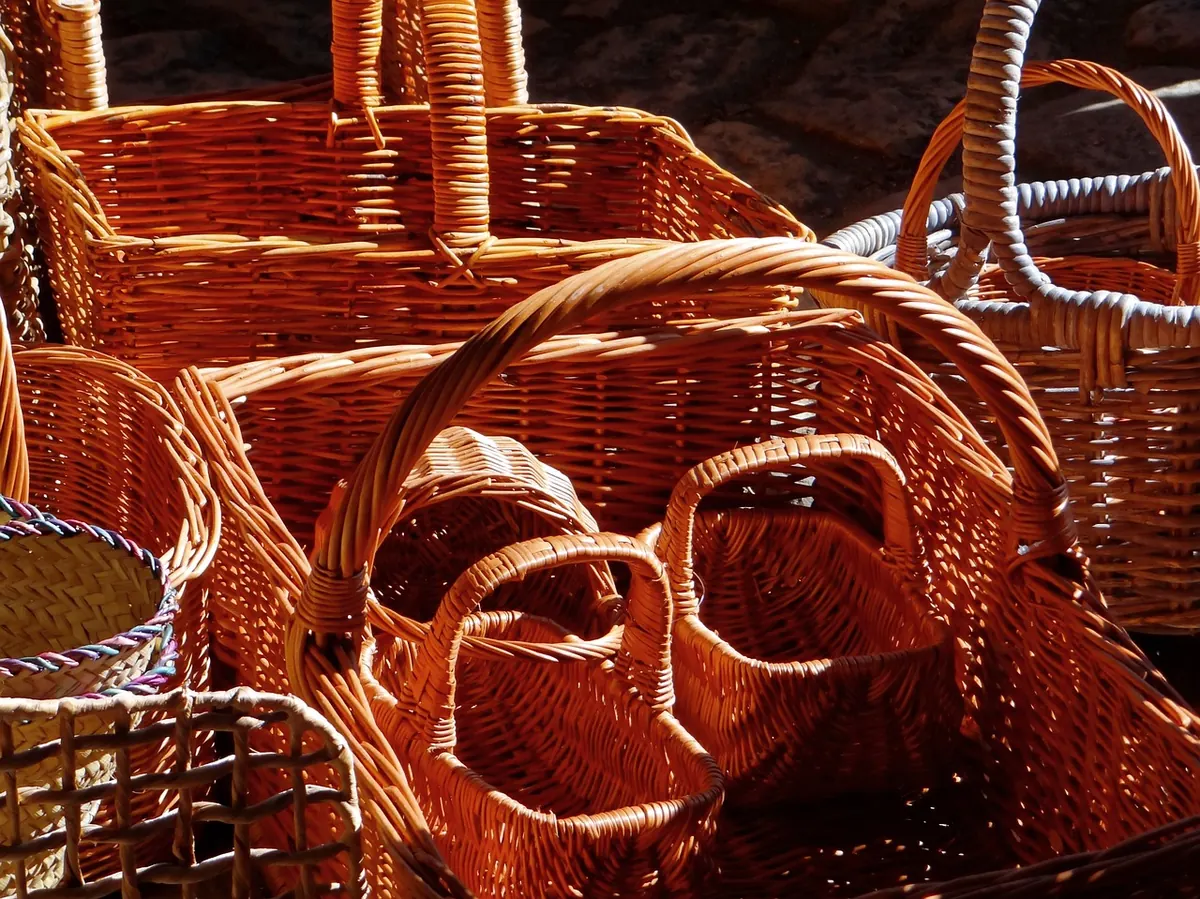
Willow has shaped parts of the British landscape in ways that are easy to miss. Wet ground cut into long, narrow beds. Farm buildings with high, airy doors for drying rods. Place names carrying the old words withy and sally. The craft itself is still working — grown, cut and woven in Somerset, Norfolk, Cumbria, Wales and Scotland, and taught in day courses by makers who mostly work alone. Here is where the traditions sit on the map, and how to see them for yourself.
Willow grows where most crops sulk. It wants damp ground, tolerates winter flooding and will crop from the same stools for decades if it is cut properly. Growers cut rods in winter while the sap is down, bundle them and stack them to dry. Dried rods keep for months; before weaving they are stood in water for days or weeks to make them supple again. That is why you will see soaking tanks, old brick pits and bundles tied in streams beside working withy beds.
Varieties matter. Osier (Salix viminalis) is the strong, flexible workhorse for baskets and hurdles. Finer willows suit small, precise work. Buff willow is boiled with the bark on and then peeled, while white willow is peeled while still green and dried; both give the pale rods you see in most shop-bought baskets. The regional words for the plant itself are a clue to how local the trade once was: withy in Somerset, sally in the West Country and Ireland, sallow in the Fens, osier in the basket towns.
There is also a difference between growing and weaving. Some makers buy in prepared rods by the bundle; others manage a few rows of their own and cut exactly what they need. The smell of a freshly cut withy bed — bitter, green, a little like wet tea — is one of the quiet pleasures of a winter visit. In summer the same bed is a dense, rustling crop, alive with bees and warblers, and easy to mistake for an untidy hedge.
This is the largest surviving willow-growing area in Britain. Villages such as Stoke St Gregory, Burrowbridge, Westhay and Westonzoyland were surrounded by withy beds, and rods went out by cart, rail and canal to basket works in Bristol, London and the Midlands. The Coates family still grow and process willow at Stoke St Gregory and run a visitor centre on the site, which is the clearest place in the country to see the whole process from bed to basket, with displays, a nature trail and weaving courses. Nearby, the Somerset Rural Life Museum in Glastonbury holds tools and baskets that show how central the crop once was to ordinary farm and household life.
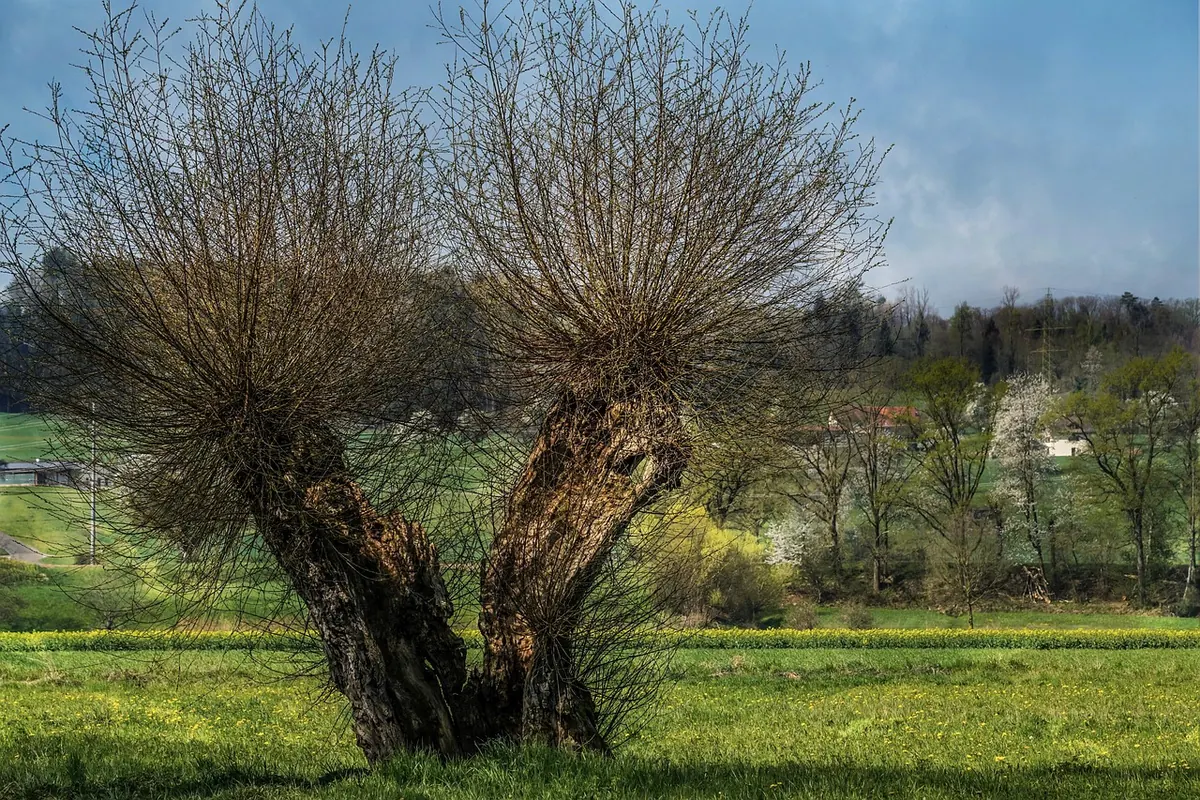
On the Levels, willow was not a sideline. It paid rents. A good withy bed could be cut every year or two, and the rods were graded by length and thickness: long, straight rods for baskets, shorter ones for hurdles, coarse stuff for fuel or bank reinforcement. The landscape still shows the pattern — narrow strips, wet ditches, pollarded willows along rhynes — and many footpaths cross old withy grounds. Winter is the best time to see cutting; summer is best for understanding how much growth the wet ground can produce.
In the Broads and the Fens, willow went by the name sallow, and it grew alongside reed, sedge and alder. Here the craft leaned towards agriculture and the water: eel traps, fish creels, lightweight baskets for fruit and vegetables, and wattle hurdles for sheep and markets. Towns such as Wroxham, Acle and Reedham sat at the centre of a network of small workshops, while Norwich and Great Yarmouth absorbed baskets for shipping and domestic use. The Waveney Valley, in particular, still has makers working with locally cut rods, and the area's marshes and broads give a good sense of the wet, working landscape that willow needs.
For visitors, Gressenhall Farm and Workhouse near Dereham is a useful stop for rural crafts, and the Broads museums and staithes explain the old trade in reeds, sedge and willow. Look out for the word sallow on maps and in field names — it often marks a damp corner that was once cut for rods.
Cumbria has its own willow story, bound up with sheep, slate and the hard work of upland farms. The oval swill basket — a strong, open basket used for carrying potatoes, feed and kindling — is the region's best-known form. It is woven from willow or hazel, sometimes both, and made to sit against the hip or back. Fell farms also used willow for sheep hurdles, gates, and the frames of carts and sledges. The damp valleys around Cockermouth, Lorton and the Eden Valley, and the mosses of the Solway plain, provided the rods.
Today the tradition survives mainly through individual makers and craft courses. Museums such as Tullie House in Carlisle and the Beacon Museum in Whitehaven hold rural material, while arts centres and village halls run day workshops in swill and round basket making. If you go, ask about the difference between a swill and a dale basket; the answer usually comes with a demonstration.
In Wales, willow weaving sits alongside a strong tradition of coracle making. The coracle — a small, light boat for one person — is built on a framework of split willow, traditionally covered with hide and later with flannel and tar. On the Teifi, around Cenarth and Cilgerran, coracle makers still use willow, and the craft is kept alive by demonstrations and races. Baskets, creels and agricultural containers were also part of the rural economy, especially in the border counties and along the river valleys.
St Fagans National Museum of History near Cardiff is the best single place to see Welsh willow work. Its historic buildings, craft demonstrations and recreated gardens show how baskets, hurdles and coracles fitted into everyday life. The museum also runs weaving courses, often in spring and autumn. In west Wales, the Teifi and Tywi valleys remain good places to see willow beds and coracle frames, and local makers often sell direct from workshops.
Scottish willow traditions are often coastal and practical. The creel — a rounded basket used for lobster, crab and fish — was woven from willow or hazel and slung over the shoulder or on a pony. In Gaelic, the word cliabh covers a creel or basket, and the form varies from island to island. Inland, willow made baskets for peat, potatoes and harvest work, as well as hurdles and lightweight frames.
The Scottish Fisheries Museum in Anstruther and the Highland Folk Museum at Newtonmore both hold creels and rural baskets, and the latter often has craft demonstrations in summer. In the Highlands and Islands, willow weaving is enjoying a revival through community workshops, crofting groups and craft fairs. Look for courses in places such as Perthshire, Argyll and the Borders, where local growers are once again cutting rods from wet ground.
Willow weaving is not a museum craft. It is a living trade, but a quiet one, usually carried
Photo: 27707 / Pixabay
You click 'spin', the reels blur, and for a second you're convinced the machine is deciding your fate in...
Ten willow weaving projects for balconies and small gardens, from plant supports and herb baskets to bird...
Keep willow rods supple, clean and mould-free with simple storage habits, from wrapping fresh bundles to...