The Real Mechanics of Online Casino Games and Sports Betting
You click 'spin', the reels blur, and for a second you're convinced the machine is deciding your fate in...

Walk into a willow grower's yard in winter and you'll see bundle after bundle of rods, sorted and labelled by colour. Three words appear again and again: brown, buff and white. They sound like shades on a paint chart, and in a way they are — but they also describe how the rods were processed after harvest, and that decides how they feel in your hands, how long they need soaking, what they cost and how the finished basket will look in a year's time.
Choose well and the weave flows. Choose badly and you'll spend an afternoon wrestling stiff rods that crack at the bend.
Willow for weaving is cut in winter, tied into bundles and dried. After that, the rods take one of three routes.
Brown willow is dried with the bark still on. Nothing more is done to it, which keeps the price down and the look rustic.
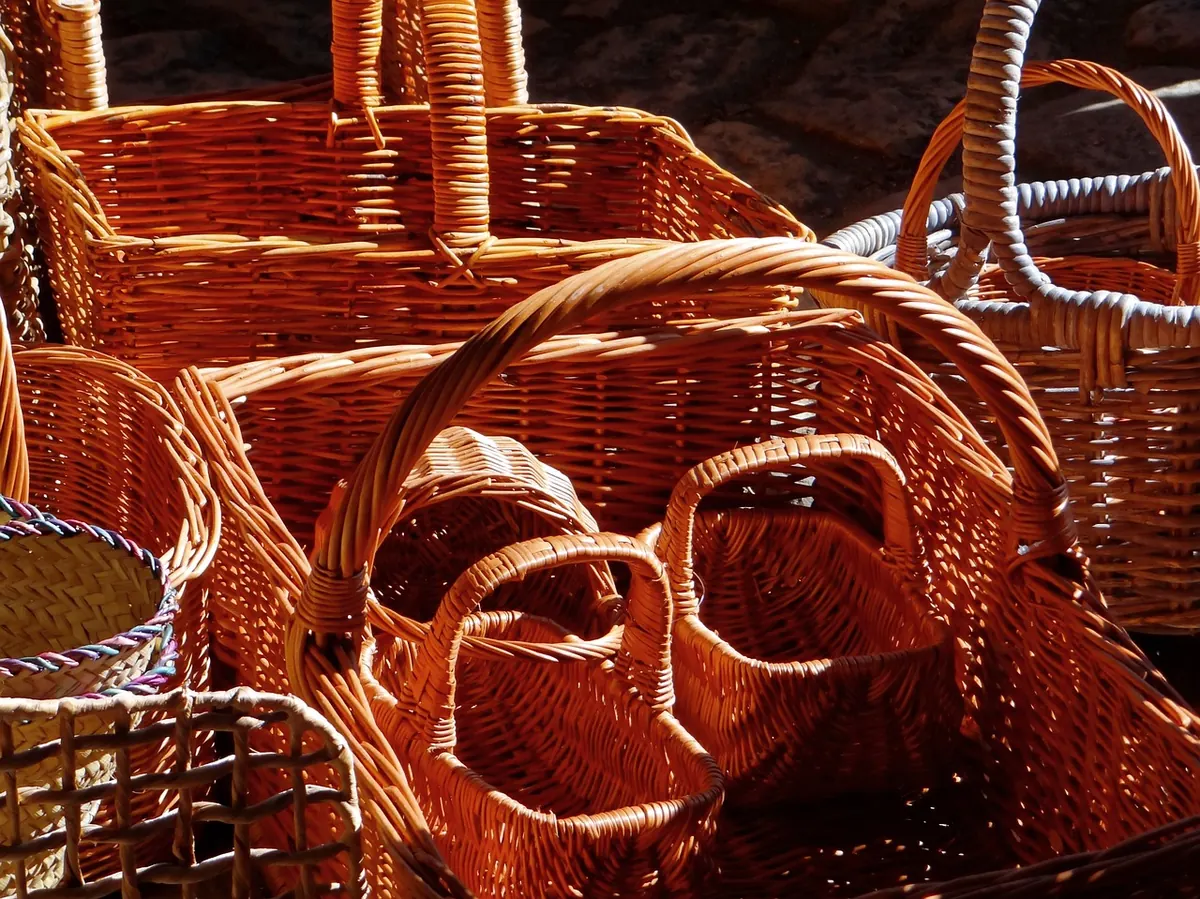
Buff willow is boiled in tanks for several hours, then stripped. The boiling loosens the bark and leaves the wood underneath a warm honey-tan. If you've seen a traditional English basket on a market stall, buff is probably what you were looking at.
White willow is peeled while the rods are still green, then dried slowly out of direct sun so the wood stays pale. That extra handling is why white usually costs the most.
Underneath the processing, any of them can be a number of willow varieties; a grower may favour particular willows for fine white work. But the label on the bundle tells you about preparation first.
Brown willow is the stiffest of the three. Bark adds grip and bulk, and it holds water out, so brown rods need a long soak — a day at minimum, several days for thick rods — before they bend willingly. Even then they have a mind of their own. That stubbornness makes brown brilliant for strong, chunky work and hard on the hands for long sessions.
Buff is the all-rounder. It soaks through in a few hours, bends smoothly and holds its shape without much fuss. It has enough flexibility for curves and enough body for sturdy baskets. If you are learning to weave, buff is usually the kindest teacher: it forgives uneven tension and rarely splits unless you force a sharp bend.
White is the most flexible and the most refined. Because the bark has been removed before drying, the rods are smooth and pale, with a clean surface that takes dye beautifully. They soak quickly — often an hour or two is enough — and bend like cord. The trade-off is that white can be less forgiving of rough handling: it may kink if you bend it too tightly, and it shows every mark. It is the choice for fine, decorative work, delicate handles and baskets meant to be admired as much as used.
All willow needs to be soaked before weaving, but the three types behave differently. A useful rule of thumb is to soak brown overnight, buff for four to six hours, and white for one to two hours. Thick rods and cold weather will push those times longer. After soaking, drain the rods and let them mellow — wrap them in a damp cloth or plastic sheet for an hour or so. Mellowing lets the moisture even out through the rod, so the surface isn't soggy while the core is still dry and brittle.
Test a rod by bending it into a circle. If it feels supple and doesn't crackle, it's ready. If it snaps, soak it longer. If it feels spongy or smells sour, you've over-soaked it; let it dry a little before use. Brown willow often benefits from a longer mellow, while white can be used soon after draining. Buff sits comfortably in the middle.
Brown is usually the cheapest because it needs no boiling or peeling. Buff costs more because of the extra processing, and white costs the most because it is peeled by hand or machine while still green and then dried carefully. But price per bundle isn't the whole story. Brown rods are often thicker and heavier, so you may need fewer for a given basket. White rods are slender, so a fine basket can take more rods and more time.
In terms of durability, brown willow is the toughest. The bark resists abrasion and moisture, making it ideal for garden baskets, log baskets, plant supports and anything left outside. Buff is strong and long-lasting indoors or in sheltered spots; it's the traditional choice for shopping baskets, laundry baskets and harvest baskets. White is less weather-resistant. It will last for years indoors, but prolonged damp can make it more vulnerable to mould and staining. Outdoors, it will silver and soften faster.
Aesthetically, each has a distinct life. Brown starts rustic and dark, then fades to a soft grey-brown as it weathers. Buff keeps its honey glow for a long time, especially if kept dry, and develops a warm patina. White starts almost ivory and slowly turns to a pale gold or cream. If you want a basket that looks intentional in a modern room, white or buff is usually easier to place. If you want something that looks like it came from a hedgerow, brown is unbeatable.
Use this quick guide as a starting point, then adjust for the project in front of you.
You can also mix them. A brown frame with buff weaving gives structure and contrast. A buff basket with white accents looks crisp and modern. Just remember that different rods soak at different rates, so keep the bundles separate in the water and test each type before you begin.
One of the most common mistakes is treating all willow the same. Soaking brown for an hour because white worked fine last time will leave you with cracking rods and a frustrating afternoon. Another is skimping on mellowing: rods that are wet on the outside but dry inside bend badly and snap. A third is storing willow badly. Keep bundles dry, off the floor and out of direct sun. Damp storage encourages mould; too much sun makes rods brittle. If you buy in bulk, label each bundle with its type and date so you aren't guessing next winter.
Finally, don't be fooled by colour alone. A brown rod isn't necessarily a different species from a white one. The same willow variety can become brown, buff or white depending on how it is treated after harvest. That is why it pays to buy from a grower who can tell you not just the colour but the variety, the growing conditions and the intended use.
If you are new to willow weaving, start with buff. It is the least fussy, the most versatile and the easiest to source. Once you understand how it feels when it is properly soaked and mellowed, try a small project in brown to learn the value of strength, and a small project in white to learn the value of finesse. Each material teaches a different lesson. The right choice isn't about which is best in the abstract; it's about matching the rod to the job, the setting and the hands doing the weaving.
Photo: Couleur / Pixabay
You click 'spin', the reels blur, and for a second you're convinced the machine is deciding your fate in...
A tour of Britain's willow-growing heartlands, from the Somerset Levels to Cumbria and the Scottish coast,...
Ten willow weaving projects for balconies and small gardens, from plant supports and herb baskets to bird...