The Real Mechanics of Online Casino Games and Sports Betting
You click 'spin', the reels blur, and for a second you're convinced the machine is deciding your fate in...

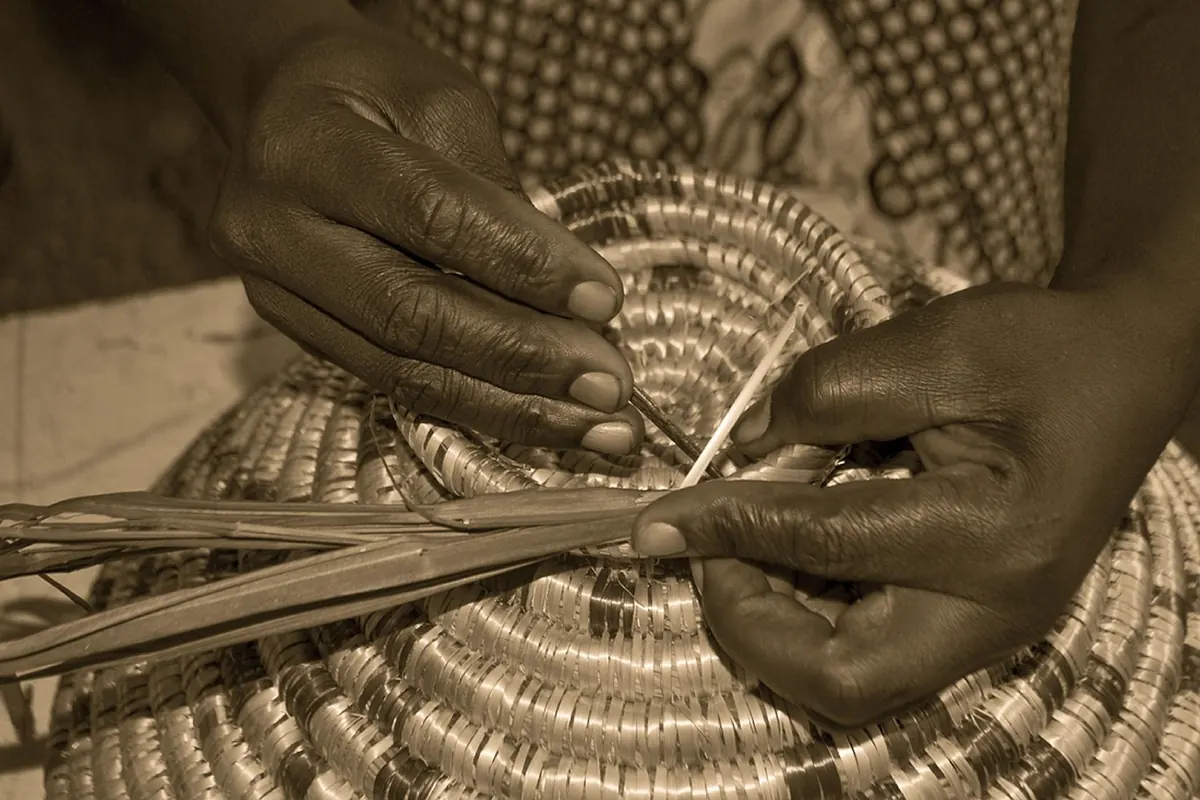
Most first baskets lean, pinch or sag somewhere. That is normal, and it says nothing about whether you have a feel for willow. The faults that make a basket look homemade in the wrong sense are usually the same handful of habits repeated, and every one of them has a fix you can practise on your next basket rather than the one already hanging on the wall.
Tension is the whole game in basketry, and inconsistency is the beginner's signature. You start a basket gripping the rod gently, then gradually pull harder as the sides rise, and the result pinches in around the middle like an hourglass. The opposite fault — going slack towards the top — gives you a basket that flares and refuses to hold its shape.
Two habits cause most of it. The first is pulling each weaver from a slightly different hand position, so one round goes in tight and the next goes in loose. The second is gripping the willow too hard because you are worried it will slip. Hold the rod flat against the round below with your thumb, draw it round with your fingers, and let the stake keep it in place.
A useful test: press the side of the basket with your palm. It should feel firm and faintly springy, like a well-stuffed cushion — not soft, and not so hard that the weave has cut grooves into the stakes. If you can slide a weaver sideways with your thumb, that round is loose. Weave a scrap band of randing on six or seven spare stakes, roughly 15cm long, and practise nothing but even tension. It is a dull exercise, and it will improve everything you make afterwards.
The base decides whether the rest of the basket has a chance. On a round base built over a slath — a cross of three or four rods — the same three faults appear again and again.
Cupping, where the edges curl up like a shallow dish, usually means the pairing weavers were pulled too tight in the first few rounds, or the stakes were not spaced evenly around the slath. Doming, where the middle bulges, comes from loose weaving and from never looking at the base from the side. A rock, with one edge lifting off the bench, generally traces back to upsetting — the moment you bend the stakes up to form the sides.
Willow that is not ready to weave will fight you all the way to the border. Dry rods crack at the bend, refuse to tuck in tightly and leave gaps you will spend the rest of the basket trying to hide.
Sort your bundle by thickness before anything else. Thicker rods suit the base and the stakes, medium rods the body, finer ones the border and ties. A basket woven from whatever came to hand looks lumpy, and the lumpiness is not your weaving — it is the material.
Brown willow, still wearing its bark, needs a long soak, often several days for thicker rods. Buff willow usually wants only a few hours to overnight. Timings vary with the batch, the weather and the diameter, so test rather than trust the clock. Bend a rod round your finger: if it feels cool and bends without cracking or creaking, it is ready. Then mellow the bundle — wrap it in a damp cloth or a plastic bag overnight so the moisture evens out along the rod. Willow straight out of the water is slippery and skittish; mellowed willow is a pleasure to handle.
Small gaps between rounds come from not pressing the weave down as you go. Willow is springy, and a round that looks tight when you finish it will sit proud of the one beneath unless you push it home. Work round the basket with your fingers or a beater after each round. The weave should sit snugly against the round below, with a fingertip's worth of give and no more. A gap that appears in one place only often means you used one weaver too few for the space, so the randing has spread to fill it.
Crossed stakes, where the uprights lean into each other, look scruffy and make the sides wander. Keep each stake upright as you pass it, and if one has already drifted, a gentle straighten while the willow is still damp will usually bring it back.
The staircase effect happens when you join every new weaver in the same spot, so the joins stack into a ridge that spirals up the basket. Stagger them: join on opposite sides of the work in turn, tuck the join behind a stake, and alternate which end you start with — butt end one time, tip the next — so the thickness of the weave stays even.
A basket that narrows has tension creeping up on you. One that flops is being pulled outwards instead of round. Check the diameter across the top every few rounds with a tape or a length of string; the numbers will tell you what your hands are doing long before your eye notices.
Borders go slack for a simple reason: not enough soak. A border rod must be supple enough to bend round twice without cracking. Work it flat rather than let it twist, keep the tension firm, and press each pass down onto the round below before taking the next. The last three rounds of the body carry the strain of the border, so weave them a little firmer than the rest.
If a basket is going to fail, it will usually fail at the base or the border. Check both before you trim anything.
If the border already feels slack, it can often be rescued. Dampen the top few centimetres with a wet cloth, leave it ten minutes to soften, then work round the rim tucking the border tight against the top round with a bodkin or the tip of an awl. It will not match doing it firmly in the first place, but it will hold.
Trim on a slant, close to the weave, rather than straight across — a flat cut shows. Do not cut so flush that the tucked end slips out; for your first few baskets, leave a short tail turned in behind a stake and trim it properly once the basket is dry.
Then leave it alone. Willow shrinks as it dries, so a basket woven slightly firm will tighten into shape, while a loosely woven one will open up and rattle. Dry it in a cool, airy spot, out of direct sun and away from radiators, and resist the urge to fiddle with it while it settles.
None of this needs new tools or better willow. It needs a little patience in the first ten minutes, when the base is small and easy to correct, and a little honesty at the end, when the border is the only thing anyone will actually touch. Keep your first three baskets. Look at them again next year and you will see exactly which habits you have broken.
Photo: 102Messmanos / Pixabay
You click 'spin', the reels blur, and for a second you're convinced the machine is deciding your fate in...
A tour of Britain's willow-growing heartlands, from the Somerset Levels to Cumbria and the Scottish coast,...
Ten willow weaving projects for balconies and small gardens, from plant supports and herb baskets to bird...