The Real Mechanics of Online Casino Games and Sports Betting
You click 'spin', the reels blur, and for a second you're convinced the machine is deciding your fate in...

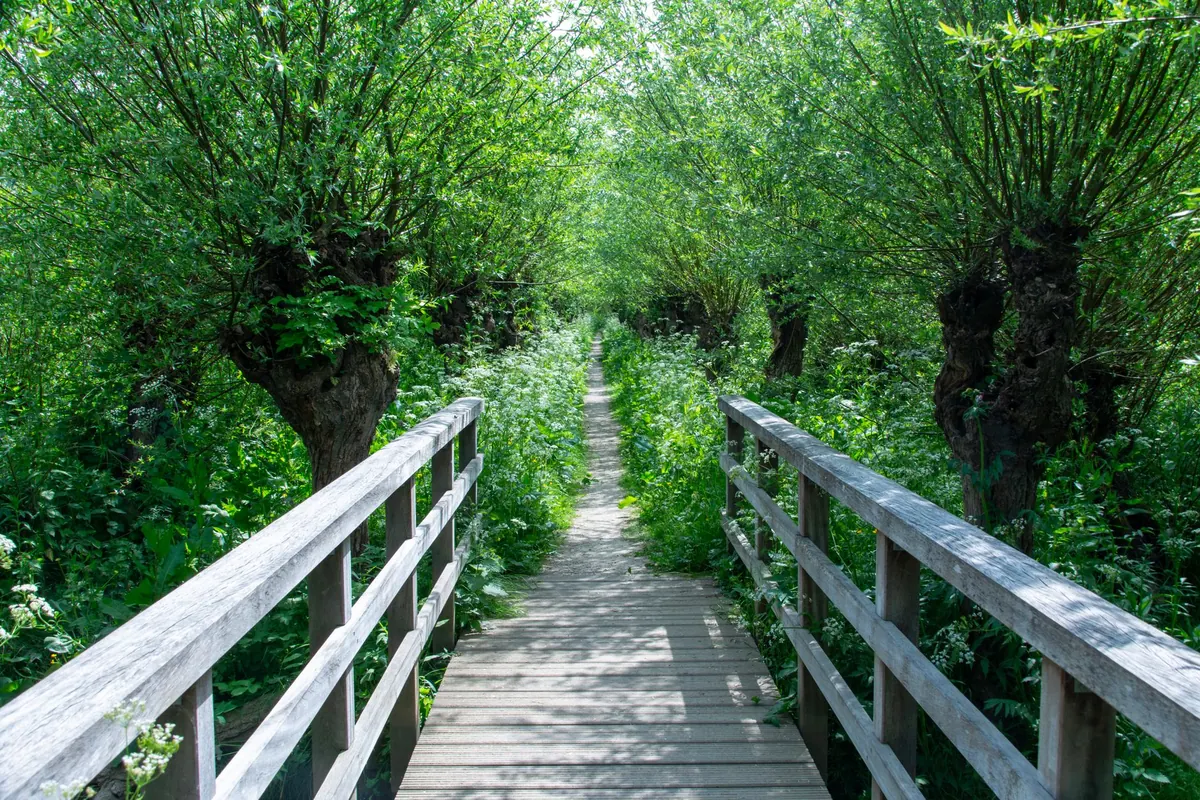
A willow boundary can be two completely different things. One is a living hedge: rods pushed into damp winter soil, rooting, leafing, growing away, and needing you to cut it back every year. The other is a length of dried, woven willow fixed to posts — a handsome fence that will never grow an inch. Both look right in a British garden, and both go wrong for the same reason: they were chosen for how they look in the first week, not for how they behave in the fifth year.
A living willow fedge — the word is a blend of fence and hedge — is bought as unrooted cuttings, usually 1.5 to 2.5 metres long. You plant them in the dormant season, roughly November to March, either straight into prepared soil or into a shallow trench. They root, shoot, and start acting like a hedge within a season. The structure you weave at planting is only the skeleton; the plant builds the rest.
A dead willow screen is a manufactured object. Dried willow is woven around upright rods into rigid panels or rolls, which you screw or tie to posts. It has no roots, no sap and no opinion about your soil. It does its job on day one and never changes shape.
Living willow is usually cheaper per metre in materials than a good woven panel, but the rods arrive in bulky bundles and you need a fair quantity of them — a decent run of fedge swallows several hundred rods. Willow is heavy when fresh, so delivery matters. You will also want a weed-suppressing mulch along the line, and water in the first summer.
A dead screen costs more per metre, and then you add posts, brackets and fixings on top. The posts are where people economise and regret it: a screen full of winter rain catches the wind like a sail, and cheap softwood posts set shallowly in clay will move within a couple of winters.
The hidden cost of a living fedge is your time, every year, indefinitely. The hidden cost of a dead screen is that one day it will need replacing.
Newly planted willow looks thin. Expect a sparse first summer, a genuinely useful screen by the second, and real density by the third if you weave the new growth back in each year rather than simply chopping it off. Willows are vigorous; in good soil and reasonable light, many will put on a metre or more of new growth in a season.
The catch is winter. Most willows are deciduous, so a living fedge drops its leaves and you are left with stems and weave — some screening, but you can see through it.
A dead screen is opaque from the moment it is hung, in February as much as in July. What you buy is what you get, though: it never thickens, and its height is fixed. It also blocks wind rather than filtering it, which is worth knowing on an exposed site.
A living fedge is a coppiced hedge, and coppicing is the whole point. Once a year, in late winter before the buds break, cut the previous season's growth back to the framework. Then use the best of those long, whippy rods to weave back through the structure, alternating the direction. That single habit is the difference between a dense fedge and a row of straggly trees with a thicket at the base.
The routine looks like this:
Budget an hour for a few metres once you know what you are doing. A dead screen asks only for a check after gales: tighten ties, replace any post that has started to move, and patch or replace panels as they go brittle. Untreated willow in direct contact with soil will rot, so keep the base of a panel clear of damp ground if you can.
A living fedge, cut annually, can last indefinitely — the stool stays young and keeps producing. It needs light, and it needs moisture. Deep shade and thin, dry chalk will leave you nursing it forever. Willow roots are thirsty and travel, so keep a good distance from drains, soakaways, pipework and house foundations. On a boundary, remember that a tall willow casts shade into a neighbour's garden, and that tall boundary planting is a common source of friction.
A dead screen is finite. In a sheltered garden with sound posts, many woven panels give roughly a decade of service before they need patching or replacing; on an exposed or coastal site, expect less. That is not a fault, just a fact of a timber product left outdoors.
For living willow, plant in the dormant season and keep the rods in water until they go in the ground. Clear grass and weeds along the line first — competition is what kills young willows, not cold. Water through the first summer, and do not let the ground dry out completely. If your site is very dry, a dead screen is the kinder choice.
For a dead screen, choose posts that will outlast the panels, set them deeper than feels necessary, and leave a small gap under the base so air can move and the willow is not sitting in wet soil. Buy from a weaver who can tell you the species and how it was dried.
Before either goes in, talk to your neighbours if the boundary is shared or the planting will be tall. If you are unsure who owns the fence line, or whether any restriction applies to height or structure, check your deeds or take proper legal advice — a short conversation now saves a long one later.
Photo: Jan van der Wolf / Pexels
You click 'spin', the reels blur, and for a second you're convinced the machine is deciding your fate in...
A tour of Britain's willow-growing heartlands, from the Somerset Levels to Cumbria and the Scottish coast,...
Ten willow weaving projects for balconies and small gardens, from plant supports and herb baskets to bird...